Two boxes. Different evenings.
Sushi Go! vs. The Mind: competition or a shared challenge?
One asks what you will choose. The other asks when you will act together.
Editorial choices, not personalized results or hands-on reviews. We may earn from qualifying purchases through the paid links below.
Competition or a shared challenge?
Choose original Sushi Go! for competitive pick-and-pass card combinations with 2–5 players. Consider The Mind for a cooperative number-card challenge with 2–4 players and a central communication constraint. Neither is the automatic better game; the group and kind of interaction decide the fit.
Choose original Sushi Go! when choosing cards is the point
Original Sushi Go!
2–5 · ages 8+ · competitive pick-and-pass
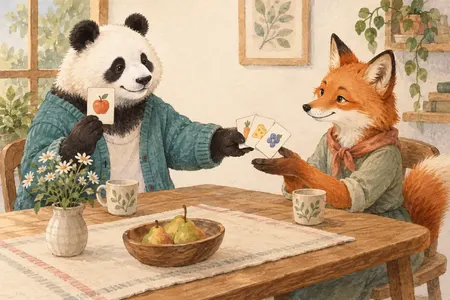
The fit is a group that wants drafting and combinations, not a general claim that a small box suits every gathering. The original range includes five; it does not include six.
Skip it if: The group wants cooperation, dislikes drafting, needs six places or already owns this game.
Check before buying: Match Original Sushi Go!, the English-language edition and the actual group count. Gamewright lists ages 8+ and 15 minutes; learning time and your own group's playing time can differ.
Choose The Mind when the shared constraint sounds interesting
The Mind
2–4 · ages 8+ · cooperate without card talk

The fit is curiosity about cooperating without ordinary card talk. Buying it for a conversation-filled gathering misses the very thing that defines the game.
Skip it if: Ongoing conversation, individual winners or a fifth simultaneous player is essential.
Check before buying: Confirm the original The Mind by Pandasaurus, English instructions and ages 8+. The publisher lists 15 minutes; a first explanation and repeat attempts may take longer.
Compare before you choose.
Open the question that matters to your choice. These are researched comparisons, not results from hands-on testing.
Compare the options side by side
Which one fits?
Choose original Sushi Go! for competitive pick-and-pass card combinations with 2–5 players. Consider The Mind for a cooperative number-card challenge with 2–4 players and a central communication constraint. Neither is the automatic better game; the group and kind of interaction decide the fit.
| Their everyday clue | Start here | The exact choice |
|---|---|---|
| The group wants drafting and individual competition | Original Sushi Go! → | 2–5 · ages 8+ · competitive pick-and-pass |
| The group wants cooperation with limited communication | The Mind → | 2–4 · ages 8+ · cooperate without card talk |
| Five people must play together | Sushi Go! fits five; this The Mind edition does not → | 2–5 · ages 8+ · competitive pick-and-pass |
Before you buy
- Choose rivalry or a shared attempt before comparing boxes.
- Confirm the exact group's count and the English-language edition.
- Read the rules, check duplicate ownership and compare the current total cost.
There is no need to manufacture a winner. Pick the interaction the recipient wants, respect the player boundary and check the original edition. That is a purchase reason you can explain without a popularity claim.
A few questions before you choose
Which one is better for five people?
Within these exact reviewed editions, original Sushi Go! includes five in its 2–5 range. The Mind's 2–4 range does not. That is a capacity conclusion, not a claim about which game is more enjoyable.
Have you played both and scored them?
No. This is an original comparison based on the reviewed product identities and publisher descriptions. It contains no hands-on score or tested best-game claim.
Research notes and source limits
What remains unverified
Sources and the limits of this article
By WishNudge. Original scenario-based analysis using the product identities and editions reviewed on October 4, 2026. We have not tested these products. There are no live prices, stock claims, popularity rankings or promised outcomes. Check the selected listing before buying.
More gift context
Both fit into the idea of a smaller card game, but that description hides the important difference. Sushi Go! makes choosing and passing cards part of competition. The Mind makes a shared attempt under a communication constraint the activity.
If you are choosing a gift, picture the people opening it after dinner. Do they want their own score and a friendly rivalry, or are they curious about trying a common challenge? That answer is more useful than a generic claim that a game is easy or popular.
The difference is what happens between the players.
In original Sushi Go!, you select a card and pass the remaining hand, aiming to build combinations. The attraction is the decision about what to keep and what moves around the table. It is a different kind of interaction from a fast-reaction card-slapping game.
In The Mind, the group tries to play numbered cards in ascending order under its communication rules. Pandasaurus describes the lack of speaking or communication as a central constraint. Read those rules rather than interpreting the title as real mind reading or a promise of personal connection.
Five players is a real boundary in this comparison.
The reviewed original Sushi Go! range is 2–5. The reviewed The Mind range is 2–4. If five friends want to play together, that eliminates The Mind from this exact pair. A similarly named or expanded product is not part of this comparison.
Both publishers list ages 8+ and 15-minute playing times for these games. Those are publisher details, not a guarantee of suitability or the length of a first session. Check language, rules and the actual group's comfort with the format.
A strong choice includes a reason to say no.
Sushi Go! is less compelling for someone who dislikes drafting or already owns the original. The Mind is less compelling for a group that wants to keep chatting through the activity or prefers individual winners. A clear mismatch saves you from buying a game for a box-size reason alone.
If neither sounds right, return to the broader game-night guide instead of forcing a winner. Word grids, turn-based tiles and familiar matching cards offer other routes, each with its own capacity and comfort checks.
Find an exact product name
The exact options, with a reason to choose or skip
Game nights · Exact-item reference
Choose original Sushi Go! when choosing cards is the point
Gamewright Sushi Go! Original Card Game
Read this item’s reason to choose, when to pass, and buying checks above →
Product identity and edition checked October 4, 2026; not a hands-on test. Edition, source and buying checks are in this item’s card above.
See original Sushi Go! on Amazon (paid link)Game nights · Exact-item reference
Choose The Mind when the shared constraint sounds interesting
Pandasaurus Games The Mind
Read this item’s reason to choose, when to pass, and buying checks above →
Product identity and edition checked October 4, 2026; not a hands-on test. Edition, source and buying checks are in this item’s card above.
See The Mind on Amazon (paid link)Keep choosing