The evening is the gift
Hosting game night? Make these five decisions before buying a game
The box is one part of the plan. Make the rest easy to join.
Editorial choices, not personalized results or hands-on reviews. We may earn from qualifying purchases through the paid links below.
Make the plan before choosing a game.
A new box is optional. First decide who will play, what kind of participation feels welcome, and whether a game you already own fits the evening.
Before you buy: five decisions
Players — Who will play at the same time?
Count everyone who wants to join. Check the exact edition’s range; do not assume another version has the same capacity.
Pace — What does everyone want to do?
Ask about spelling, spoken calls, quick hand actions and turn-taking. A format is only a useful option if the group welcomes those demands.
Space — Where will the game be played?
Check the usable surface. Separate word grids and a shared card pile need different arrangements.
Teaching — Who will explain the rules?
Read the included rules and allow time for questions. A publisher’s playing-time estimate is not a promise for your evening.
Ownership — Does an existing game already fit?
If it does, use it. Buy another game only for a wanted format or a requested title.
Buy a game to complete a plan, not to create one by accident. When the people, pace and place fit, the purchase has a clear reason. When a game you already own does the job, invite the friends and use it.
After the plan: three examples for different groups
These are not three interchangeable six-player options. The Mind is for 2–4 players. For six people, compare the separately listed editions and their participation requirements.
A route when the plan is small-group cooperation
The Mind
2–4 · ages 8+ · cooperate without card talk
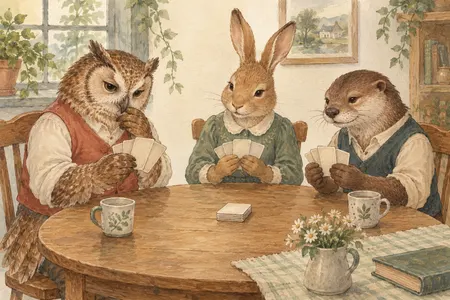
This makes sense only after the group has chosen a communication-limited challenge. Its 2–4 range rules out using this reviewed box for a larger group together.
Skip it if: The night is mainly about ongoing conversation or more than four people want to play together.
Check before buying: Confirm the original The Mind by Pandasaurus, English instructions and ages 8+. The publisher lists 15 minutes; a first explanation and repeat attempts may take longer.
A route when the plan is word grids and enough table room
Classic English Bananagrams
English · 144 tiles · check the current box’s player and age guidance
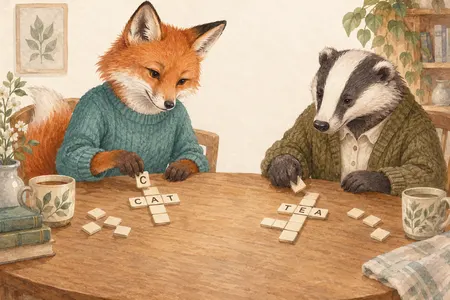
Build your own English word grid while the other players build theirs. Leave room for each player’s layout.
Skip it if: Spelling under pressure would not suit everyone, or they need another language, larger letters or a different tile format.
Check before buying: Confirm Classic, English and 144 tiles. The recorded US fields disagree on 1–8 versus 2–8 players. Six is within both ranges; confirm solo play before choosing it for one person. Check the current pack’s age guidance and leave space for individual grids.
A route when the plan is familiar cards with agreed rules
UNO Retro
US listing: 2–10 players · 108 cards · Retro edition
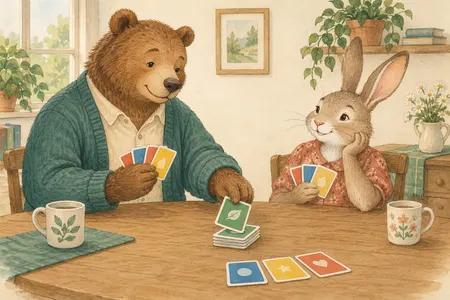
For someone who wants the Retro look and familiar color-and-number play.
Skip it if: They already enjoy their deck, want a different UNO variant, or would not welcome another copy.
Check before buying: The listing’s age fields conflict. Mattel’s 7+ DHW43 reference has not been matched to this current pack. Before choosing for a child, check the printed age, language and included rules. Confirm Retro—not Flip, No Mercy, Giant UNO, a tin or an expansion.
Compare how the three games play → In the choosing article
Compare before you choose.
Open the question that matters to your choice. These are researched comparisons, not results from hands-on testing.
Compare the options side by side
Which one fits?
Before buying, decide who will play at once, what pace everyone wants, where the game will fit, who will explain it and what the group already owns. Choose a game only after those five answers point to a real gap. A good plan can use an existing box.
| Their everyday clue | Start here | The exact choice |
|---|---|---|
| A small group wants a shared, quiet challenge | The Mind, for 2–4 players → | 2–4 · ages 8+ · cooperate without card talk |
| A larger group wants words and room for grids | Classic Bananagrams, within its 1–8 range → | English · 144 tiles · check the current box’s player and age guidance |
| A larger group wants familiar matching cards | UNO Retro, within the pack's 2–10 range → | US listing: 2–10 players · 108 cards · Retro edition |
A few questions before you choose
Do I need a new game to host game night?
No. Start with what the group already has and wants to play. A purchase is optional and should answer a specific missing format or requested title.
Can I rely on the box's playing time?
Use it as the publisher's estimate, not a guaranteed schedule. Teaching, questions, first attempts and additional rounds can change the actual evening.
Research notes and source limits
What remains unverified
Sources and the limits of this article
By WishNudge. Original scenario-based analysis using the product identities and editions reviewed on October 4, 2026. We have not tested these products. There are no live prices, stock claims, popularity rankings or promised outcomes. Check the selected listing before buying.
- Pandasaurus Games The Mind — manufacturer or publisher information
- Bananagrams Classic, English, 144 Tiles — manufacturer or publisher information
- Mattel Games UNO Retro Edition — manufacturer or publisher information
The publisher product route may redirect to a wider catalog. Cached descriptions support play format; Classic English / 144 tiles remains the dated US listing identity, not a fresh pack match.
More gift context
A game night can stall without anything being wrong with the game. The player count may not match, the table may be full of dinner, or one person may spend the evening looking up rules while everyone else waits.
The useful purchase question is not “Which game looks entertaining?” It is “Which game fits the evening we can actually host?” The checklist below helps you choose that evening first, whether you are bringing a gift or planning it yourself.
1–2. Count the players, then ask about pace.
Count the people who want to play at the same time. Do not quietly assume a guest will observe or that a pair will share a hand. If you want to split into two games, agree on that plan and choose each box for its own group.
Next ask about the activity: fast reactions, word building, turn-based planning or cooperation. “Party game” is not a substitute for those answers. The comfort of the actual players matters more than the mood shown on a box.
3–4. Prepare the surface and the explanation.
Check the room the game needs while it is in use, not only the size of the package. Individual word grids and a growing tile layout need different space from a compact card area. Make an appropriate place for food and drinks so the play area is usable.
Choose someone who is willing to read the actual rules before the night. Leave time for questions and a first attempt; a publisher's play-time estimate is not a promise about learning. Avoid explaining every future detail at once if a simpler first explanation will let people start.
5. Check the shelf before adding another box.
An existing game with an agreed plan can be more useful than a new purchase without one. Ask what the host already owns and whether there is a specific title or edition they want. A familiar game can be a welcome gift, but an unwanted duplicate is still a duplicate.
If you do buy, match the edition, language, contents and actual player range. For a gift, include a simple invitation to try it. Keep the invitation optional: the recipient gets to decide when and whether the game belongs in their evening.
Find an exact product name
The exact options, with a reason to choose or skip
Game nights · Exact-item reference
A route when the plan is small-group cooperation
Pandasaurus Games The Mind
Read this item’s reason to choose, when to pass, and buying checks above →
Product identity and edition checked October 4, 2026; not a hands-on test. Edition, source and buying checks are in this item’s card above.
See The Mind on Amazon (paid link)Game nights · Exact-item reference
A route when the plan is word grids and enough table room
Bananagrams Classic, English, 144 Tiles
Read this item’s reason to choose, when to pass, and buying checks above →
Product identity and edition checked October 4, 2026; not a hands-on test. Edition, source and buying checks are in this item’s card above.
Check before buying: Confirm Classic, English and 144 tiles. The recorded US fields disagree on 1–8 versus 2–8 players. Six is within both ranges; confirm solo play before choosing it for one person. Check the current pack’s age guidance and leave space for individual grids.
See Classic English Bananagrams on Amazon (paid link)Game nights · Exact-item reference
A route when the plan is familiar cards with agreed rules
Mattel Games UNO Retro Edition
Read this item’s reason to choose, when to pass, and buying checks above →
Product identity and edition checked October 4, 2026; not a hands-on test. Edition, source and buying checks are in this item’s card above.
Check before buying: The listing’s age fields conflict. Mattel’s 7+ DHW43 reference has not been matched to this current pack. Before choosing for a child, check the printed age, language and included rules. Confirm Retro—not Flip, No Mercy, Giant UNO, a tin or an expansion.
See UNO Retro Edition on Amazon (paid link)Keep choosing